
Dental Implants
Understanding Dental Implants

A missing tooth can change small parts of your day. You may chew on one side, skip a favorite food, or hesitate before smiling for a photo. Dental implants offer a way to replace missing teeth with support that starts beneath the gumline, helping you feel more comfortable with your smile again.
At Klement Family Dental, we want you to understand your choices before you decide on treatment. Whether you need to replace one tooth or are looking for a more secure alternative to a loose denture, the first step is a conversation about your health, your concerns, and what you want your teeth to do for you.
A stable foundation for everyday life
A dental implant is a small post placed in the jawbone to support a replacement tooth or teeth. Once the implant has healed and the final restoration is attached, it can provide stable support for chewing and speaking. The visible tooth is made to work with your bite and blend with your smile.
Because an implant replaces the support of a missing tooth root, it can also help limit bone loss in that area. For a single missing tooth, an implant-supported crown may allow the neighboring teeth to remain unaltered. These benefits depend on a healthy foundation, careful planning, and ongoing care.
Implants are one option among several. A dental bridge or a removable replacement may suit your needs, too. We will help you compare the practical differences, including cleaning, treatment time, and cost, so you can make a decision that fits your life.
How dental implants replace missing teeth
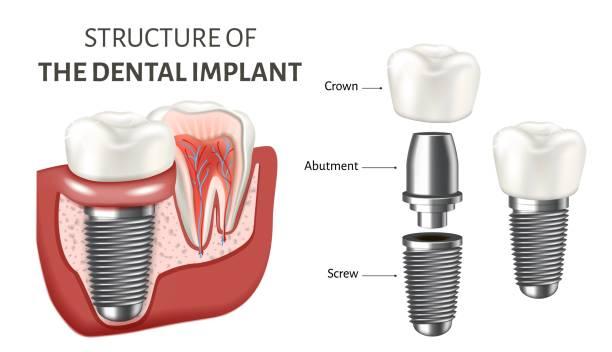
The word “implant” is often used to describe the entire replacement tooth, but the finished result usually has three parts: the implant in the bone, a connector called an abutment, and the visible restoration. The implant is commonly made from titanium; your dentist can explain the materials recommended for your treatment.
Replacing one tooth
A single implant can support a custom dental crown. The crown is the part you see when you smile. Its shape, shade, and fit are planned around the surrounding teeth and the way your upper and lower teeth meet. Unlike a conventional bridge, this approach does not rely on crowns placed over the teeth on either side of the gap.
Replacing several teeth
When several teeth are missing next to one another, an implant-supported bridge may be an option. The implants support a connected group of replacement teeth, so an implant is not necessarily needed for every missing tooth. The number and position of the supports depend on the space, available bone, and forces in your bite.
Helping dentures feel more secure
Implants can also help support or retain a denture. Some designs stay in place and are removed by a dental professional. Others attach securely to implants but come out at home for cleaning. The daily care routine differs, so it is useful to understand the design before choosing treatment.
If your current denture shifts or makes eating frustrating, explore implant-retained dentures with our team. We can discuss the support you need and whether a removable or fixed design is appropriate.
Implants, bridges, or dentures: understanding your choices

The best tooth replacement is the one that suits your mouth and that you can comfortably maintain. Implants, bridges, and dentures solve some of the same problems in different ways. Your remaining teeth, gum health, budget, and preferences all matter.
When an implant may make sense
An implant can be worth considering when you want independent support for a missing tooth, particularly if the adjacent teeth are healthy. It requires a placement procedure and time for healing. You will also need to clean around the replacement and return for regular dental care. Having enough healthy bone and gum tissue is part of the decision.
When a bridge may be a good fit
A conventional bridge fills a gap using support from nearby teeth. It may be useful when those teeth already need crowns, or when an implant is not suitable. A bridge does not require implant placement, although the supporting teeth usually need preparation. You will need to clean beneath the replacement tooth as well as around the supporting teeth.
When to consider a removable replacement
A partial denture can replace several missing teeth and is taken out for cleaning. A complete denture replaces all the teeth in an arch. Removable options can have a lower initial cost than implant treatment, but their fit, stability, and maintenance needs are different. Comparing the whole treatment plan is more useful than comparing one fee.
A damaged tooth does not automatically need to be removed. If it can be predictably restored, a crown or another treatment may help you keep it. We begin by assessing the teeth you have, then discuss replacement only where it is needed. Bring your priorities to the appointment: eating comfortably, avoiding a removable appliance, or limiting treatment time can each influence the plan.
Your dental implant consultation
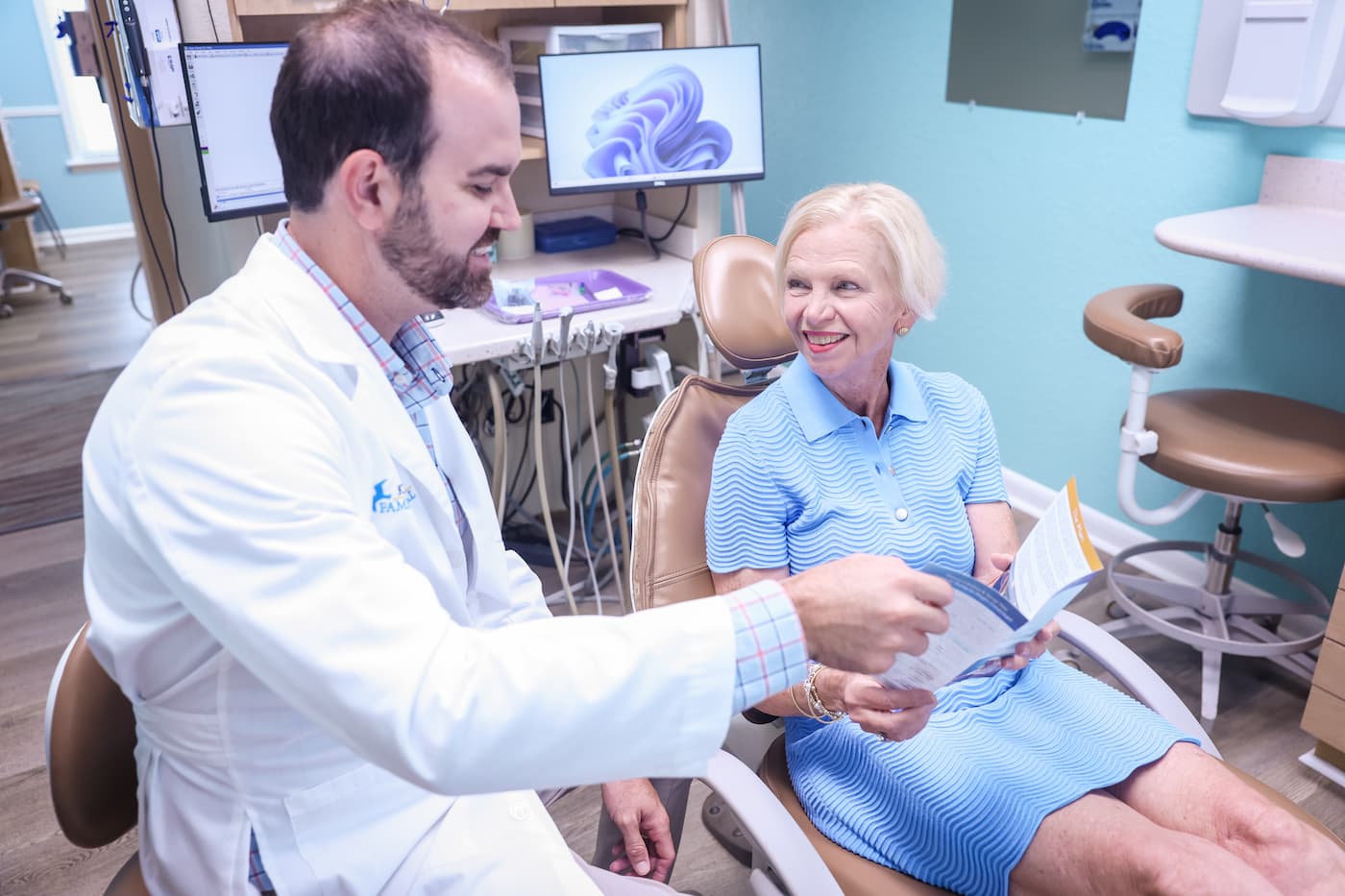
You do not need to know which implant treatment you want before your visit. A consultation is the time to ask questions and find out what is possible. Let us know what bothers you now, how long the tooth has been missing, and whether you have had difficulty with earlier dental treatment.
Looking at the whole picture
A dental examination helps your dentist assess the remaining teeth, gums, bite, and spaces that need restoring. Dental imaging helps evaluate bone and nearby structures. Additional three-dimensional imaging may be recommended when it is needed for planning.
We will also review your medical history, medications, and habits that may affect healing. Bring a current medication list, including supplements, and tell the team about diabetes, smoking, and any previous problems with healing. These details help guide the plan; they are not a reason to feel embarrassed or put off a conversation.
Am I a candidate?
Healthy gums, adequate bone, and the ability to maintain good oral hygiene are important. Adults of many ages can be considered for implants; age alone does not determine suitability. Existing gum disease or other dental problems may need attention first. Medical conditions and medications are assessed individually, and your dentist may coordinate with your physician.
What if I have lost bone?
Bone can shrink after a tooth is lost. If there is not enough support for an implant, bone grafting may be discussed. A graft can add treatment time and cost, and it is not required for everyone. Your dentist should explain why it is being recommended, what healing involves, and which alternatives are available.
Before moving forward, ask for a clear explanation of the proposed restoration, the treatment stages, and the expected fees. You should leave knowing the next step and who to contact with questions.
From implant placement to your finished smile

Implant treatment usually happens in stages. Some steps can be combined, while others need their own healing period. Your timeline depends on the starting condition of your mouth, the type of restoration, and how your body heals. Think in terms of an individual plan rather than a promised finish date.
Preparing the area and placing the implant
A tooth that cannot be saved may need extraction before replacement. Your dentist will explain whether an implant can be placed at the same visit or whether healing should come first. If grafting is needed, that may be a separate stage.
The treatment area is numbed for implant placement. If you feel anxious, tell the team beforehand so you can discuss comfort measures and whether sedation options are appropriate. Our comfort menu is another place to start that conversation. You can ask the team to explain each step and agree on a signal if you need a pause.
Giving the implant time to heal
Over the following months, bone heals around the implant to create support. The gums may feel better well before this deeper healing is complete. Follow the eating and cleaning instructions given for your procedure, and keep the scheduled checks. If the missing tooth is visible, ask whether a temporary replacement is suitable while you heal.
Fitting the final tooth or teeth
When the implant is ready, impressions or scans help create the final restoration. The dentist checks how it fits, looks, and meets the opposing teeth. Your cleaning routine will be demonstrated before treatment is complete.
Some soreness, swelling, or bruising can occur after placement. Contact the team if discomfort is worsening, the implant feels loose, or healing does not seem right. Implants involve risks, including infection or failure to integrate, which your dentist will explain in relation to your plan.
Caring for your implants and planning for cost

Everyday care protects your investment
An implant cannot develop a cavity, but the tissues around it still need daily care. Plaque can irritate the gums and contribute to inflammation and bone loss around an implant. Brush twice a day and clean between your teeth and around the restoration using the tools your dental team recommends.
The right technique depends on the design. A single implant crown is cared for differently from a fixed full-arch bridge or a removable implant-retained denture. Ask for a hands-on demonstration, especially if reaching beneath the replacement feels awkward. Let the team know about bleeding, persistent tenderness, or difficulty cleaning.
Keep up with professional cleanings and examinations so the gums, bone support, bite, and restoration can be monitored. If you grind or clench your teeth, ask whether additional protection is appropriate. Implants can provide long-term service, but the crown or other attached parts may eventually need repair or replacement.
What affects the cost of dental implants?
The total depends on more than the implant itself. An estimate may include imaging, removal of a tooth, grafting if needed, implant placement, the connector, and the final crown, bridge, or denture. Replacing one tooth and restoring a full arch involve different plans and fees.
Ask for an itemized estimate and clarification about follow-up visits, temporary teeth, and any care provided by another office. This makes it easier to understand what is included and compare your options fairly.
Dental insurance coverage differs by plan. Our insurance information and payment options are useful starting points for discussing benefits and financing. Confirm your expected out-of-pocket cost and any financing terms before treatment begins.
Common questions about dental implants
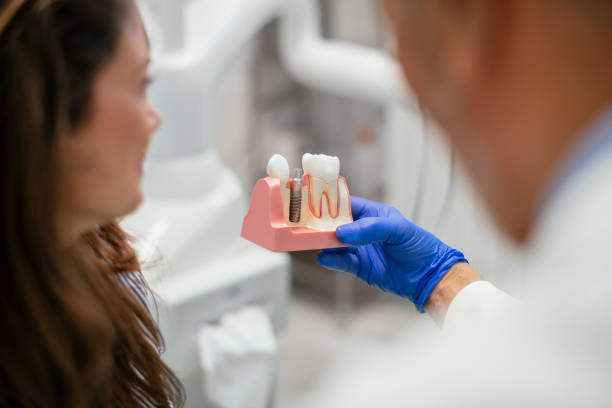
Will my implant tooth look natural?
The visible crown is planned to complement the surrounding teeth. Shade, shape, gum contours, and the available space all influence the result. Tell your dentist what you like about your smile and what you hope to change. A natural appearance is a treatment goal, but the possibilities depend on your starting condition.
How long does treatment take?
Treatment often takes several months, especially when extractions or grafting are part of the plan. The early recovery period is different from the time needed for bone to heal around an implant. Your dentist can give you an estimated sequence after examining you and update it as healing progresses.
Can I get a tooth the same day?
In selected situations, an implant and a temporary tooth may be placed on the same day. This is not appropriate for every patient, and a temporary tooth does not mean healing is complete. Ask what can safely be done at each appointment and when the final restoration would be fitted.
What can I eat during healing?
You may need softer foods and adjustments to where you chew for a time. The instructions depend on the procedure and whether a temporary tooth is in place. Follow your dentist’s guidance about returning to your usual diet; feeling comfortable alone does not show that the implant is ready for full chewing pressure.
Am I too old for implants?
Many older adults can be considered for implant treatment. Overall health, medications, bone support, and the ability to care for the restoration matter more than a birthday. An evaluation is the best way to find out whether implants are an option for you.
Let’s talk about a smile that works for you
Klement Family Dental has served the St. Petersburg community since 1979. If you are living with a missing tooth or an uncomfortable denture, we would be glad to help you understand your next step. Bring your questions, your concerns, and your goals.
Contact Klement Family Dental to request an appointment. Reach our St. Petersburg office at 727-565-2218 or our Old Northeast office at 727-231-6336.

“We have been going to Klement Dental for several years. They are easy to schedule an appointment with, have a wide range of availability. The staff there from the doctors to the dental techs and the office staff are fantastic! They are professional, friendly, caring and go above & beyond to provide exceptional care.”
John V.
St Petersburg

Book your dental cleaning online
We have two office locations in St. Petersburg and Old NE for your convenience. Book online today or give us a call. We look forward to seeing you!

Monday - Thursday:
7:00am - 7:00pm
Friday: 7:00am - 6:00pm
Saturday: 8:00am - 2:00pm
 ST PETERSBURG
7650 38th Ave. N.
St. Petersburg, FL 33710
Phone: 727-498-1959
OLD NORTHEAST
425 22nd Ave. N.
St. Petersburg, FL 33704
Phone: 727-213-8214
Copyright © 2020 Klement Family Dental. All rights reserved.